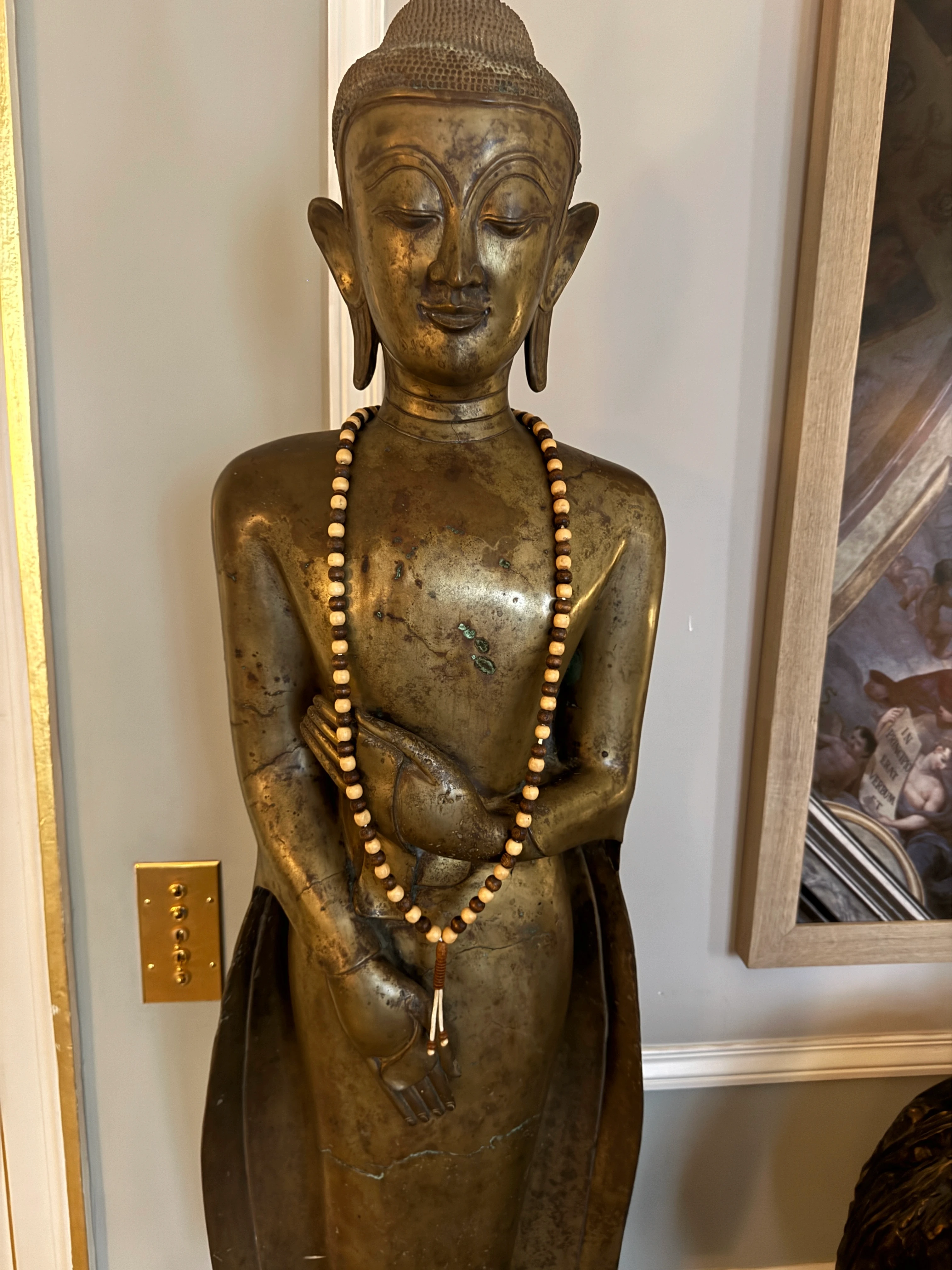
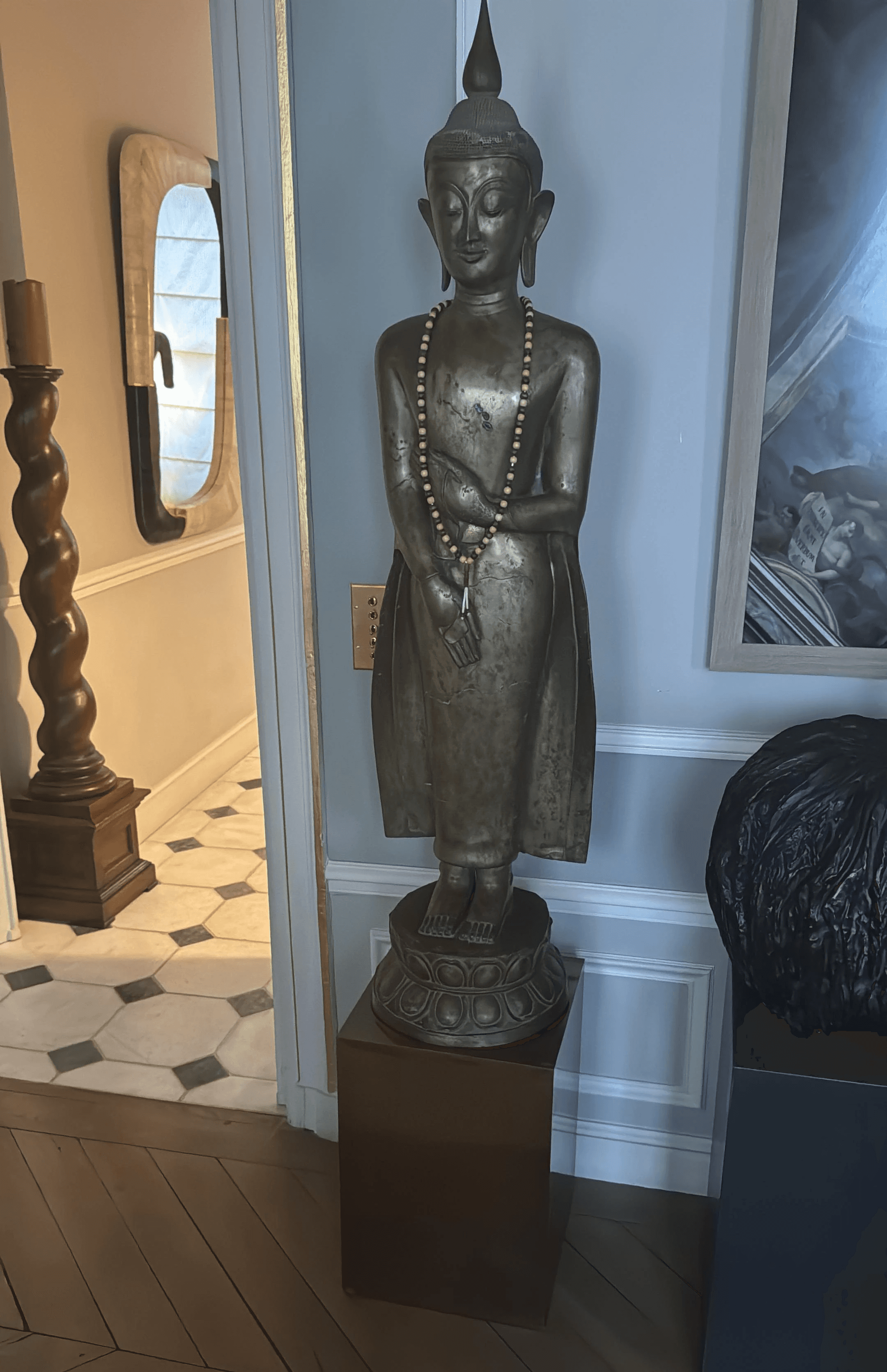
Ayutthaya Thai Buddha in Abhaya Mudra
Ayutthaya Thai Buddha in Abhaya Mudra
Thailand (Ayutthaya Kingdom), 17th century
Cast bronze with silver inlay and traces of cold-gilding, later wood plinth
Figure H 192 cm (including robe); Overall H 242 cm (with base)
Base H 50 × W 35 × D 35 cm
A standing Buddha with right hand raised in abhaya mudra (fearlessness gesture), left arm at side. The proportions follow late Ayutthaya conventions: elongated torso, flame ushnisha, downcast eyes, subtle smile.
The sanghati robe drapes in incised vertical pleats revealing the body's contrapposto beneath. A beaded silver-inlaid necklace circles the chest, with silver urna (third eye) mark on the forehead. The lotus throne base shows individually cast petals in three tiers. Bronze surface retains traces of mercury gilding on high points; patina ranges from dark brown to green. Later carved wood plinth added for display.
STYLE & CONTEXT
Late Ayutthaya bronzes (1600–1767) are distinguished by elongated proportions, linear drapery, and silver inlay—techniques imported from Sri Lankan Kandyan workshops during King Narai's reign (1656–1688). This scale indicates temple commission, likely from Ayutthaya or Lopburi. The abhaya mudra with lowered left hand (not holding robe edge) is specifically late 17th century. Comparable examples: National Museum Bangkok (BKK 2457, H 178 cm) and Christie's Hong Kong (26 Nov 2018, lot 3021, H 165 cm, HK$1.2M). The silver inlay and size suggest royal workshop origin.
Starting at
Price Upon Request