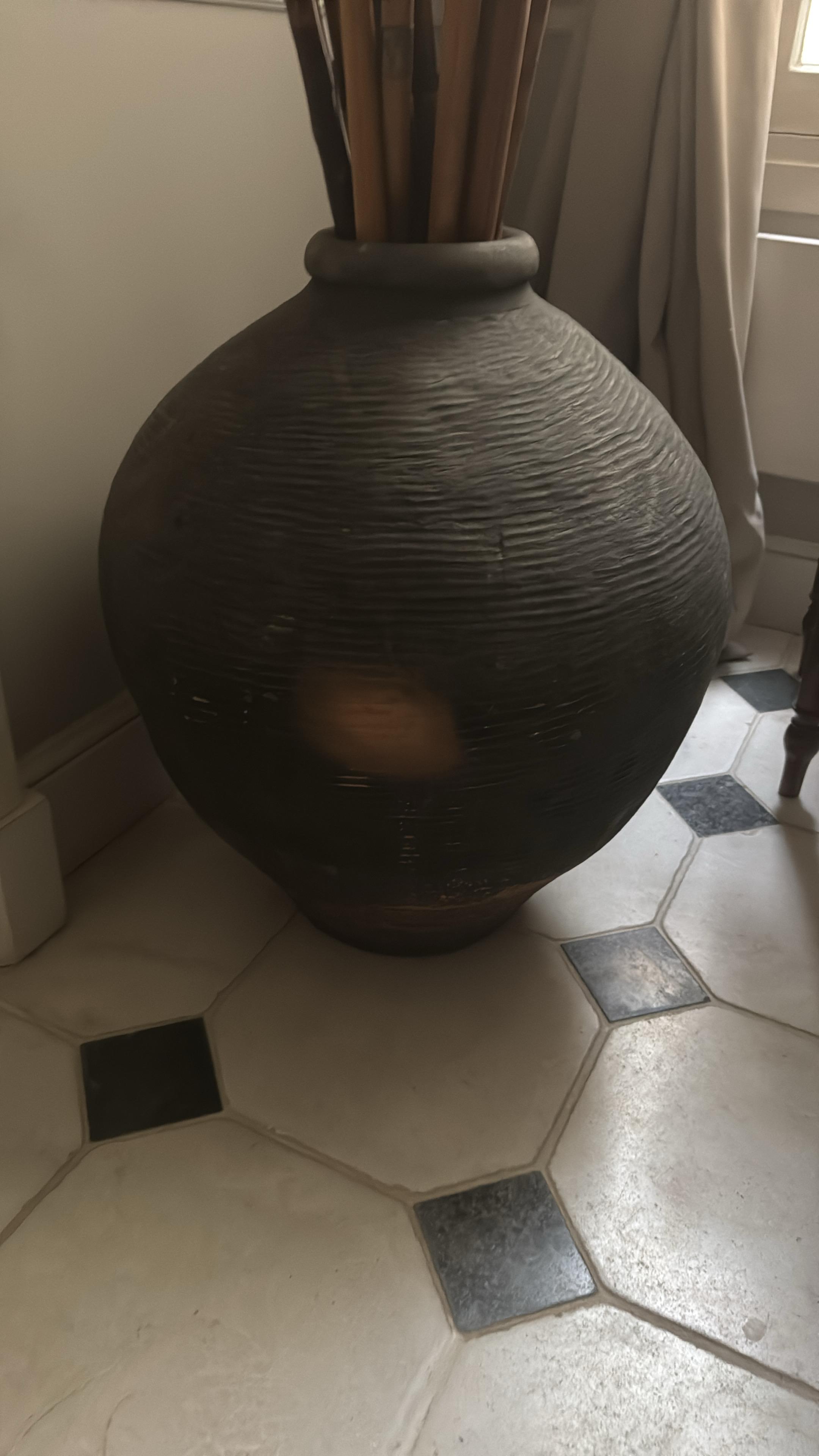
Burmese Wine or Water Pot
Burma (Myanmar), late 19th–early 20th century Earthenware with natural ash and smoke patination H 63 × Ø 55 cm A large round-shouldered vessel hand-coiled in wide horizontal ridges (kwin technique), its surface bearing the potter's fingerprints.
Wood-fired to mottled charcoal grey with iridescent ash drips streaking down one side—each firing left different marks. The short neck flares for pouring; the form held rice wine for festivals or drinking water offered as Buddhist merit. The coarse clay and asymmetric profile mark this as village pottery, not court refinement—objects made for use, acquiring beauty through function and fire.
PROVENANCE & CONTEXT
These earthenware pots were household staples across Burma, produced in Twante or Kyaukmyaung kilns using Mon-influenced coiling techniques dating to the Pagan era (11th–13th century). The form embodies Buddhist impermanence (anicca): organic, irregular, accepting the kiln's accidents. Similar vessels appear in the British Museum (Asia OA 1940.7-15.1) and documented in Sylvia Fraser-Lu's Burmese Crafts (1994). The ash patination and firing marks indicate wood-kiln firing, likely teak or padauk, which produces the characteristic silver-grey surface.
Starting at
Price Upon Request