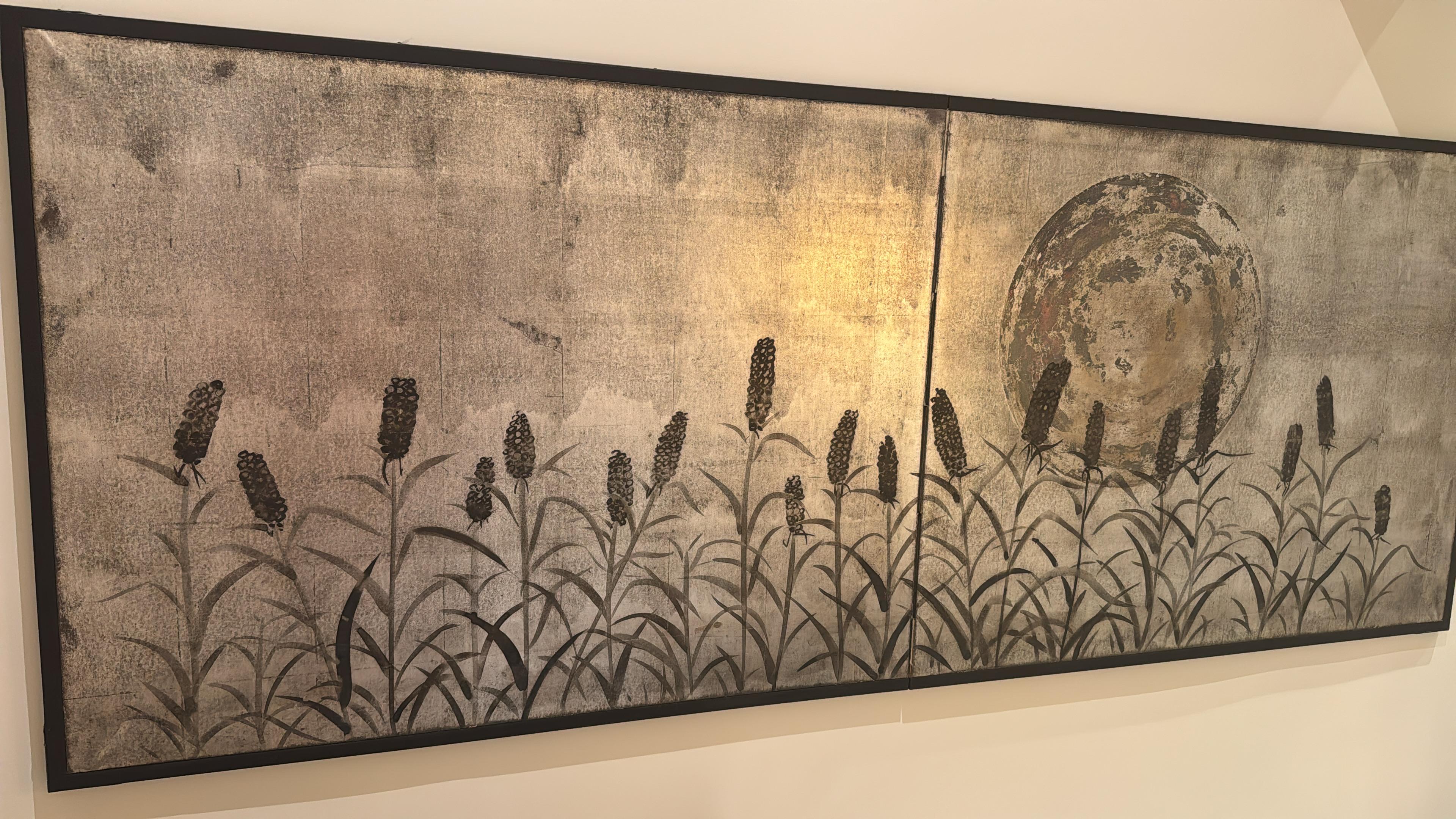
Edo Period Bi-Fold Screen
Edo Period Bi-Fold Screen (Tsukimi Scene)
Japan, 18th century (Edo period, 1603–1868)
Ink and oxidized silver leaf with copper-toned gilt on paper; lacquered wood frame
H 78 × W 188 cm (fully open); each panel W 94 cm
A two-panel folding screen (nikyoku byōbu) showing autumn moon-viewing scene: full moon rising over field of susuki grasses (Japanese pampas). The silver leaf background has oxidized over centuries to mottled grey-black with areas of iridescent sheen. Grasses rendered in black ink with varying brush widths—thin stems, feathery plumes suggesting wind movement. The moon on right panel shows gilt that has aged from gold to coppery orange-red, with flaking texture and warm undertones contrasting against cooler silver ground. Lacquered wood frame shows age-appropriate wear.
STYLE & CONTEXT
Tsukimi (moon-viewing) screens were produced throughout the Edo period for autumn seasonal display, depicting harvest moon over susuki fields—a recurring motif in Japanese poetry and painting. The silver leaf oxidation and copper-toned gilt aging are characteristic of 18th-century screens where metal leaf has interacted with humidity and air over 200+ years. The minimalist composition—large empty sky, simple grass motif—follows literati (bunjin-ga) aesthetic preferences of the mid-to-late Edo period.
COMPARABLE SALES
Similar Edo bi-fold screens with oxidized silver and tsukimi themes:
Christie's New York, 20 Mar 2019, lot 1456: $12,000–15,000
Bonhams San Francisco, 17 Jun 2021, lot 8089: $8,500
Estimated Value: $8,000–$18,000 USD
Starting at
Price Upon Request