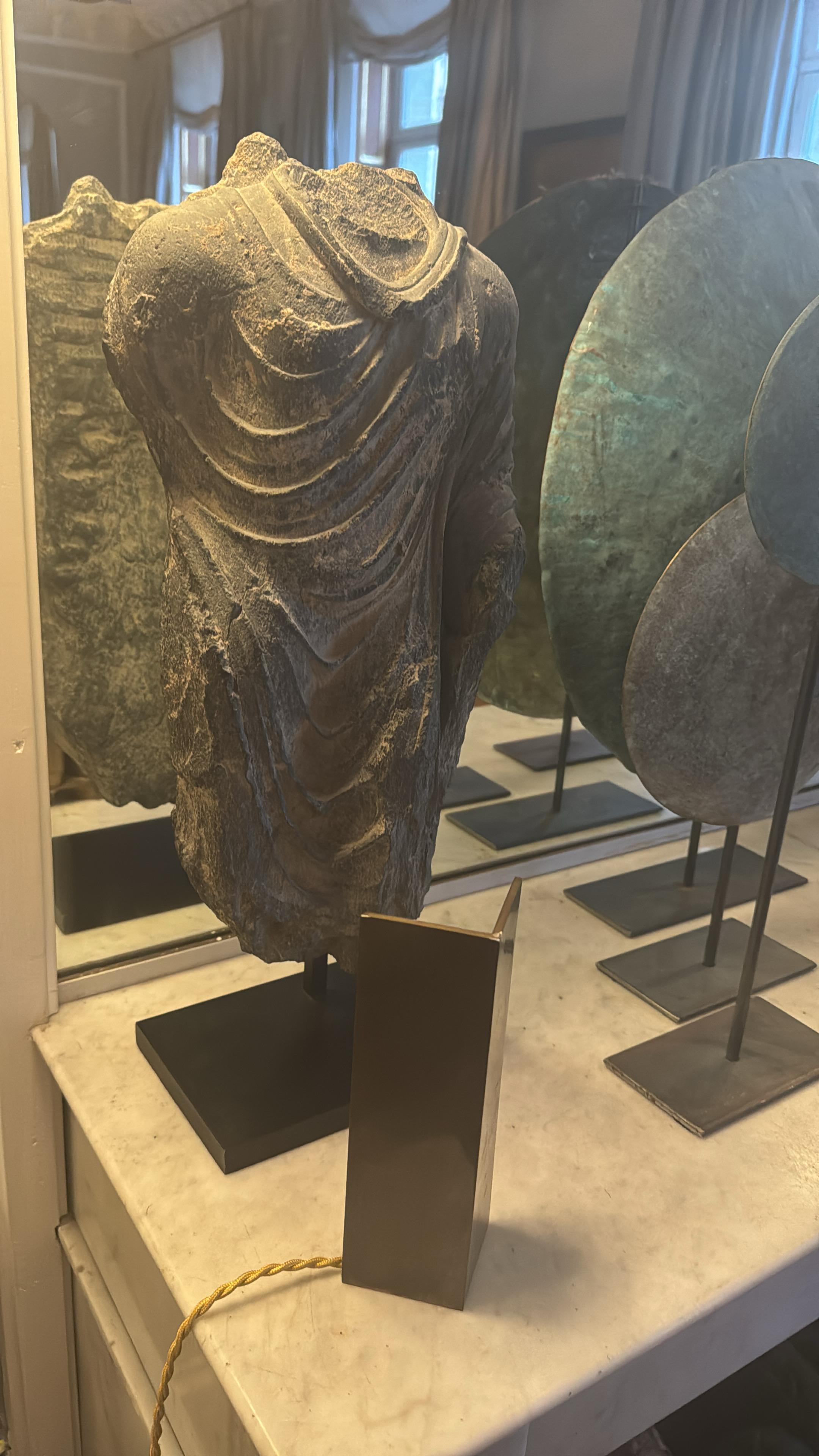
Gandharan Torso of the Buddha
Gandharan Torso of the Buddha
Ancient Gandhara (modern Pakistan/Afghanistan), 2nd–3rd century CE
Grey schist stone on blackened metal plinth
H 48 × W 23 × D 9–10 cm
A fragmentary Buddha torso showing draped robes carved in parallel vertical pleats that follow the body's form. The sanghati robe clings to the chest and wraps across the left shoulder, revealing modeling of the torso beneath—body slightly shifted left in gentle contrapposto. Surface shows polished wear from handling or ritual touch over centuries. Head, arms, and lower body missing; breaks at neck and shoulders show ancient patination matching the overall grey schist surface. The carving style—Hellenistic naturalistic anatomy combined with Buddhist iconography—is characteristic of 2nd–3rd century Gandharan workshops along the Silk Road.
STYLE & PROVENANCE
Gandharan sculpture merged Greek naturalism (introduced by Alexander's campaigns) with Buddhist subject matter under Kushan dynasty patronage. This torso likely came from a larger seated Buddha figure, originally part of a monastery stupa relief or votive shrine in Peshawar Valley or Taxila. The drapery style—thin, clinging folds carved in shallow relief—indicates early Gandharan period (2nd–3rd century CE). The grey schist and refined carving technique point to major workshop production.
COMPARABLE EXAMPLES
Metropolitan Museum of Art (acc. no. 13.96.3): seated Buddha torso, schist, H 52 cm
Lahore Museum (inv. G-234): standing Buddha fragment, similar period
Estimated Value: $120,000–$180,000 USD
Starting at
Price Upon Request