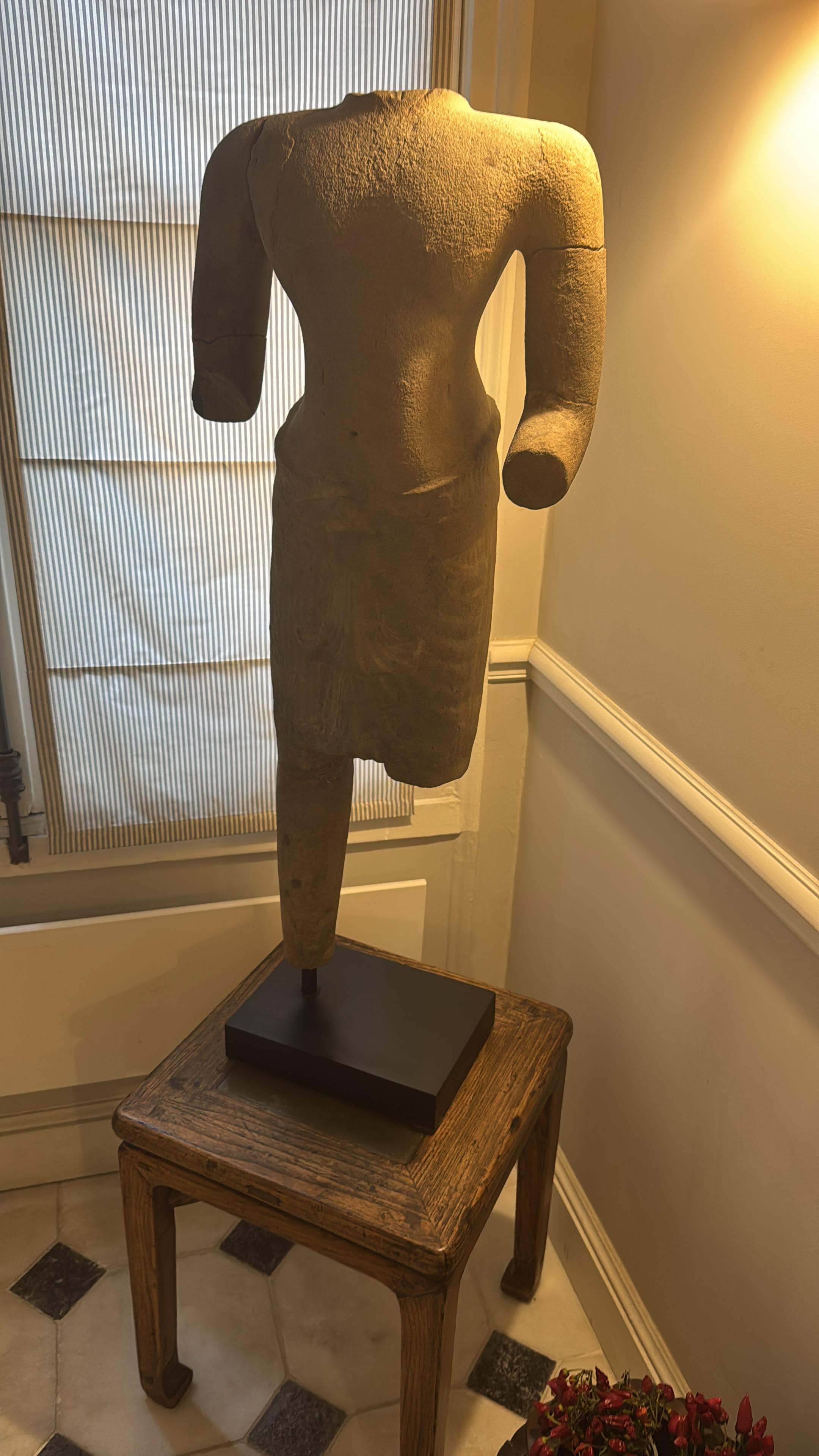
khmer male torso
Khmer Male Torso (Deva or Princely Attendant)
Cambodia, Angkor Period (late 12th–early 13th century)
Carved grey sandstone with ancient lime mortar repairs
H 105–106 × Arm span 39 cm; Base W 28 × D 20 cm
A standing male torso from a temple relief—broad shoulders tapering to a narrow waist, hips shifted in tribhanga (triple-bend) pose. The sampot (lower garment) clings in deeply carved pleats that follow the body's movement. Both arms are raised and bent at the elbows; hands are missing, but the gesture suggests offering or mudra position. The sandstone surface shows tool marks and weathering, with visible lime mortar repairs from ancient temple restoration—evidence this came from an active worship site, not a museum piece buried intact. Mounted on black plinth.
ICONOGRAPHY & CONTEXT
Under Jayavarman VII (r. 1181–1218), Angkor Thom temples combined Hindu and Buddhist imagery, with such torsos adorning gopura (gateway) towers or gallery walls at Bayon, Ta Prohm, or Preah Khan.
The proportions and carving style align with late Bayon period (c. 1200–1220), when workshops produced hundreds of celestial attendants and devas for King Jayavarman's building projects. The lime mortar repairs likely date to 13th–14th century, when temples remained active after the king's death. Comparable torsos: Musée Guimet, Paris (MG 17125) and Sotheby's New York (21 Mar 2019, lot 314, H 97 cm, $75,000–95,000).
Starting at
Price Upon Request