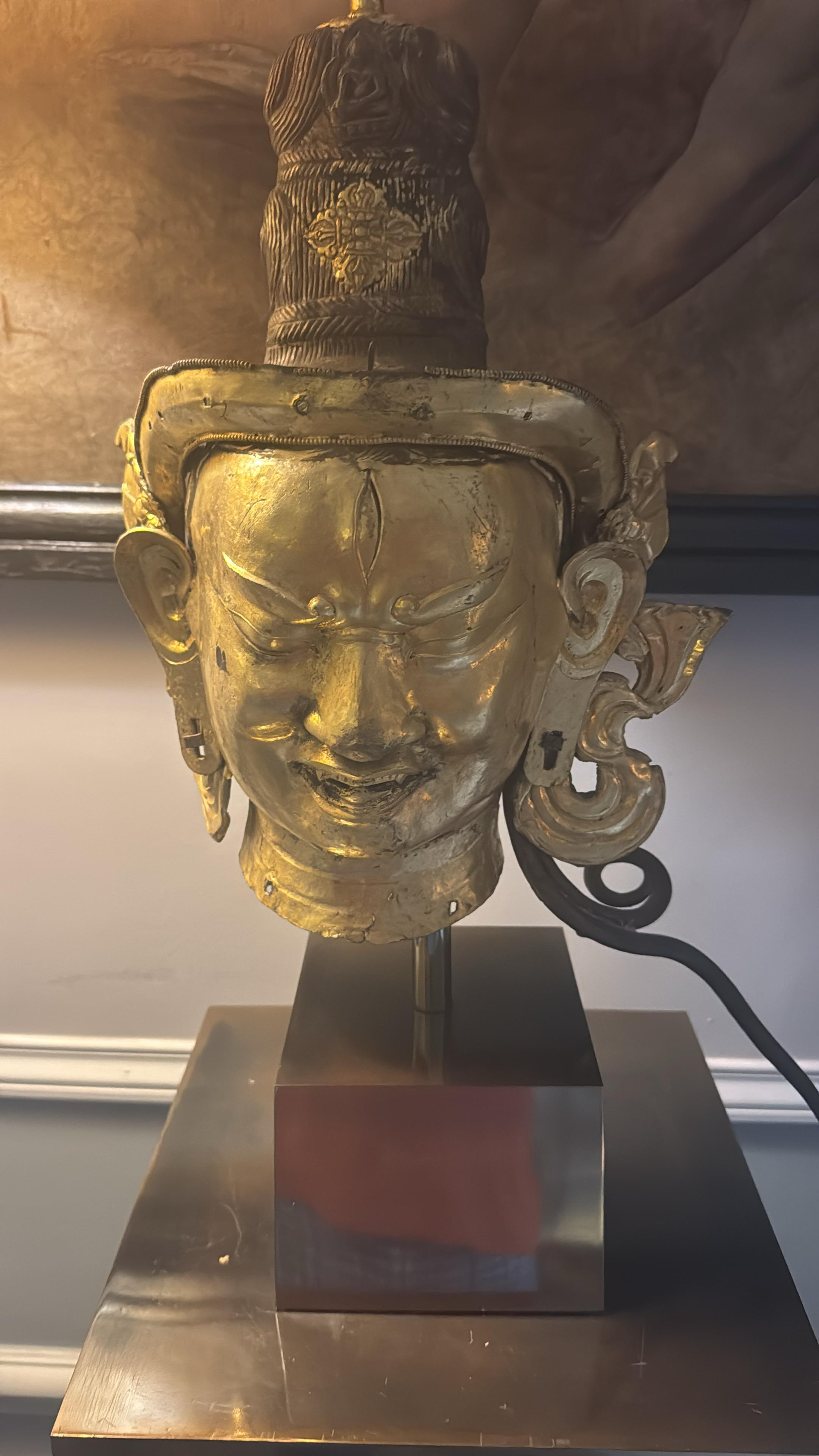
Tibetan Mask of Mahakala Tibet
Tibetan Gilt-Copper Repoussé Mask of Mahakala
Tibet, 12th–13th century
Repoussé copper with chased detailing, mercury gilding, turquoise and coral inlays
H 55 cm (including crown); W 38 cm; Depth 24 cm
A repoussé copper mask of Mahakala (wrathful protector deity) showing three bulging eyes, fanged open mouth with asymmetrical teeth, and arched brows. The five-skull crown (pancha-mukuta) retains turquoise cabochon inlays in four of five positions (one missing). Serpentine earrings hang from elongated earlobes; flowing ribbons flank the face. Central forehead shows chased urna (wisdom mark). The mask was hammered over a wooden form, then chased with fine details, and fire-gilded. Gilding remains thick in protected areas, worn to copper on high points. Surface shows ancient patina consistent with centuries of temple smoke and ritual handling. Mounted on blackened steel plinth.
ICONOGRAPHY & DATING
Mahakala masks appeared in Tibetan Buddhism during the 12th–13th century as protector deity imagery expanded under Sakya school influence. Such masks adorned monastery shrine walls or topped processional standards during cham (ritual dance) ceremonies. The turquoise inlays and crown style show early Sino-Tibetan synthesis influenced by Kashmiri metalwork. Technical analysis (XRF) indicates alloy composition of approximately 80% copper, 15% tin—consistent with 12th–13th century Tibetan workshop production in eastern Tibet (Minyak or Derge regions).
COMPARABLE EXAMPLES
Rubin Museum of Art, New York (acc. no. P1996.2.1): 13th-century repoussé Mahakala mask, H 42 cm
Christie's New York (20 Mar 2024, lot 145): 12th-century gilt-copper mask with similar crown, $1,450,000
REFERENCES
Von Schroeder, Indo-Tibetan Bronzes (2001), vol. I, plates 112A–C
Robert Beer, Tibetan Arms and Armor (2003)
Estimated Value: $1,200,000–$1,800,000 USD
Starting at
Price Upon Request